 Jag har i samband med efterforskningar på internet kommit i kontakt med yttringar av Rysk-ortodox kristendom som har en helt annan inställning till förnyelse och ekumenik än vad som kännetecknar den officiella bilden. Där finner man också kritik mot patriark Kirill och hans stöd till Putins repressiva regim till förmån för en mer kristocentrisk och barmhärtig hållning gentemot medmänniskan.
Vi kan nog knappast ana hur det är att vara en ryskortodox kristen i Ryssland om man inte ställer upp på den strikta nationella tolkning av religionen som anbefalls där och inte är beredd att hålla inne med varje uns av kritik mot ledarna.
Om vi gör tankeexperimentet att FSSPX och dem närstående grupper som förespråkar starkt kyrkligt inflytande över staten var biskopar och präster i Sverige och hade en mycket nära allians med statsministern och regeringsbärande partier och ville göra Sverige till en enhetsnation byggd på konservativa katolska värderingar, och varje form av opposition motarbetades genom trakasserier och förföljelser av olika slag, t.ex. att man fick svårt att få jobb, att man hittar på anklagelser mot en etc. – då föreställer jag mig får vi en uppfattning hur det kan vara i Ryssland.
Den inomkyrkliga kritiken finns helt klart, den är tydlig men har en betydligt mer lågmäld ton än Pussy Riots. Kanske behövdes detta för att skaka om och medvetandegöra. Hur som helst, det goda som uppmärksamheten efter kvinnornas framträdande i Frälsar-katedralen i Moskva är att Rysk-ortodoxa kyrkans stöd för Putins repressiva regim ordentligt kommit i fokus, samt över huvud taget situationen inom patriarkatet Moskva.
Här är några engelskspråkiga bloggar som jag upptäckt som representerar inomkyrklig förnyelse och konstruktiv kritik:
Salt of the Earth: Ryskortodoxt fokus, står ingen adress, men verkar ha amerikanskt ursprung. Skriver om ryskortodox andlighet, förnyelse, inte rädd att kritisera missförhållanden. Bra länkar.
Priest Matthew Jacson: Ortodox bloggande präst, också från USA.
Ancient faith radio USA-baserad radiostation + webb, informerar om ortodox tro i västvärlden.
En 26-årig ryskortodox kristen bosatt i Moskva som brukar lyssna till Ancient Faith Radio skrev ett brev som publicerades (med bevarad anonymitet) på Salt of the Earth-bloggen. Jag citerar delar av brevet här, eftersom det ger en bra inblick i situationen i Ryssland.
”I completely agree with you on the matter of the importance of sincere prayer, and of how painful, insulting and disrespectful the blasphemous “prayer” of the “PR” [Pussy Riot] band had been. But, unfortunately, while listening to your podcast, I could not help feeling, that you were either ill-informed or misinformed on some very crucial matters, pertaining to the scandal, the court case, and especially – the position of the Moscow Patriarchate.
First of all, there is no such charge as “blasphemy” in the secular legislature of the Russian Federation, nor were the “PR” band members calling for religious hatred, for which they were charged and convicted. They performed a blasphemous act; but they did not call the people to kill or persecute Christians, Jews, Muslims, or any other religious groups, and only such an act falls directly under the “call for religious hatred” charge. If such a charge as “blasphemy” existed before the incident and if the government simply enforced existing laws to a certain “crime” – no one would have said a word. But instead, the state court gave these women 2 years in prison.
—
“Officially” the Church did not keep silent until the verdict was carried out by the court (as it was stated by the Patriarchate’s representatives this spring). Nor did it call for pity or mercy to the “sinner”. On the contrary. Representatives of the Moscow Patriarchate, such as the Head of the Department of the Public Relations – archpriest Vsevolod Chaplin and the Churches’ attorney – the nun Serafima (Chernega) called for “righteous” punishment for this act of hatred. This was directly said by our Patriarch in the beginning of April, when he called the Orthodox Faithful not to tolerate the new rise of blasphemy and not to allow the punk band’s act to be seen as a mere political protest.
The Patriarch is a strong speaker, and won a powerful emotional response from his flock, talking about how the band sinned against Our Lord, against the Orthodox shrines, against Our martyrs, our nation and the fallen soldiers of the Napoleonic Wars, (in whose memory the Cathedral was erected). Was this a Christian response? Was this an attempt of a responsible pastor to calm his faithful down and appeal to Christian mercy and prayer?
—–
Unlike his predecessor – Patriarch Alexei II (of Blessed Memory), who managed to sustain excellent relations with the state, yet skillfully refrain from direct involvement in politics, our current Primate got the Church directly involved in the most scandalous and passionate election campaign in modern Russian history. His support of Putin – whose right to run for a third, 6-year presidency is more than questionable – put the Church under direct attack not only from some kind of atheistic “liberals”, but from the wide range of common people, who have no real protection from corrupt government officials and have nothing but contempt, fear and hatred for the state “powers”.
How would you feel, if you personally knew dozens of people, who were required to vote for Putin and his “United Russia” party under the direct threat of losing their jobs – and then hear the Patriarch, our Patriarch and the Primate of our local Church, call the protests of hundreds of thousands of desperate people, who came out ot ask for their right to vote – “ear piercing shrieks”? This was said at a meeting with the candidate V. Putin on February 8 2012.
The two “Punk prayers” took place roughly two weeks after the Patriarch’s meeting with Putin (the one and only candidate for presidency, with whom the Patriarch and other religious leader decided to meet, which can rightfully be seen as open political backing). Moreover, thanking Putin for his personal part in the “unparalleled” spiritual recovery of Russia and of its Church, the Patriarch forgot to mention his own predecessor – Patriarch Alexei II, our beloved Father who actually led the Church during the 17 years of recovery from the Soviet desolation.
——-
Should we, as Orthodox, as Christians, not ask ourselves – had the Patriarch asked his flock to forgive the blasphemy, had he given the judgment to God, and not to the state court, had he called for these women to be released and “go in peace”, would the current rise of anti-clericalism and this strange cult of making the “PR” band into prisoners of conscience and “political martyrs” actually taken place?
——
The resurrected Christ the Saviour Cathedral does not belong to the Church. It belongs to the government and is under the “care” of a certain “Fund of the Cathedral of Christ the Saviour”. This organization runs several souvenir shops around the cathedral, a restaurant – recently built right by the cathedral, as well as a car-wash and a banquet hall, located in an underground complex directly beneath the Church. This gives rise to popular belief that “the Church” rents the halls of its cathedral for expensive corporate parties and banquettes.
But instead of fighting for the Cathedral “to be a house of prayer”, the Patriarchate not only conforms with the current state of affairs, but parallel with the “PR” case, the Church won a lawsuit, defending its right for the commercial use of the cathedral premises – along with the infamous “Fund”. What kind of “message” is this supposed to give the nation, which does not differentiate between the patriarchate’s officials and the Church as a whole?
What other Cathedral, in what other Orthodox patriarchate or diocese belongs to a state-owned commercial organization, which builds a banquet hall in the place of a crypt? Yet, the Patriarchate does nothing, disregarding the waning reputation of this magnificent, truly resurrected cathedral.
In light of recent events, should we, as Orthodox Christians, not honestly ask ourselves – “what really happened?”, “what could have caused people to start this unjust, senseless act of blasphemy and protest in Moscow’s cathedral?”, “Why so many Christians, including the Primate of our local Church, who shed so many tears listening to the Passions narratives, fail to show Christian mercy when beset by a single act of blasphemy?”. Instead, we go on the defensive, carrying out relics, calling on for the State’s protection and retribution.
But, as Orthodox Christians in Russia, we are beset by both – attacks from the “outside” insulting our Church, as well as from irrational and irresponsible actions of our own clergy and even – the patriarchate’s officials.
Unlike our brothers and sisters in Albania, Finland, Georgia, the OCA, and, of course, in the Antiochian Orthodox Church – we, in Russia, have no ability to ask or receive accountability from our hierarchs and primates. And this, truly has a devastating effect on the state of the Church and its reputation in Russia.
Should not such problems be openly addressed outside the internet? Should not we speak of our own sins in the wake of new attacks on our Church?”
I ett uppföljande e-brev som publicerades på denna blogg beskrev den unge mannen från Moskva hur hätsk stämningen kan vara och hur människor trakasseras även av kyrkans folk:
”The situation we, as Christians, are going through in Russia is troubling. And the troubles are on the rise. Just a day ago there was a fight in Moscow, when a young man, wearing a T-shirt saying “Theotokos, chase out Putin!” (a quote from the infamous punk-band) was beat up by “Orthodox” youth activists for insulting their “religious” feelings. To give you an idea about how divided and controversial our clergy’s reaction is to the problem. One well-known priest, Father Alexei Uminskii, said that he condems not the young man with the purely political statement on his shirt, but the “Orthodox” youth activists, who made T-shirt with verses from 1 Corinthians, 13, and went about the city beating up those, that offend their “Christian” feelings. Meanwhile, another well-known igumen said that he would, despite being a monk, join the youth and hit the young man on the head for insulting his religious and patriotic feelings, since Putin is the president and the symbol of our country. Here is the link, unfortunately – it is only in Russian.
Also I would like to say, that I am not trying to “slander” His All-Holiness, the Patriarch of Moscow, the ruling bishop of my diocese. But I am seriously worried, when I see a bishop, who would think it easier to organize meetings and processions “in defence of the Faith and the Good Name of the Church” than to provide open accountability for his financial and political actions. If he has nothing to hide, why try give rise to “patriotic” feelings of the flock instead of providing them with a simple audit?”
I ett annat blogginlägg återger Matthew Jacson en artikel av Fr. George Chistyakov, ursprungligen publicerad på ryska 1997, som beskriver bakgrunden till situationen i Ryskortodoxa kyrkan. Det finns en obenägenhet till ekumenik och en benägenhet att se allt utomstående inflytande, inkl kristet sådant utanför den ryskortodoxa sfären, som fientligt. Artikeln heter Whence This Anger? Författaren gör en återblick på den ryska historien, och skriver om tiden efter 1988:
”Russia turned its face anew towards the Orthodox faith, but again the mind-set did not change, it remained inimicocentric. In the changed situation the Enemy was uncovered surprisingly quickly. Now among the Enemy are the heterodox and ecumenists, in other words those among us Orthodox who won’t live according to the inimicocentric thought process. And the struggle began once again. Just as uncompromising as always.
Logically the question arises; why are the new enemies Christians of other confessions and not atheists, which at first seems to be more natural. Actually, the answer is very simple. In the first place the atheists are different only in that they live not knowing that Jesus is amongst us, and they do not feel his presence — but as you know, the new ideologues of Orthodoxy don’t have a Christocentric consciousness either, therefore the barriers which would separate them from the atheists simply do not exist.
In the second place, and this is of no lesser importance: the atheists are “ours” and the heterodox are “foreign”… In the religious sphere, no one considers that the struggle against confessions because they were brought into Russia from abroad in essence contains the germ of a struggle against Orthodoxy because it itself was brought in from abroad in 988.
…..
The very logic of the struggle against “not ours” is such that it inevitably (whether we want to or not) leads to complete isolation and stagnation in the sphere of the arts and politics, and in the sphere of faith — to paganism, to an empty ritualism and magic, completely devoid of the evangelical spirit.
—
The source of religious intolerance is paganism, which is incorporated with Orthodoxy and mixed with it, the non-Christocentrism of our thinking and our isolation from the Gospel and from Jesus.
—
It is not heterodoxy but paganism which poses a danger to the Orthodox faith in Russia today. Fortunately many people understand this. But Christ is always with us, amongst us, thus, if we believe in Him, we need not be afraid.”
De dömda kvinnorna, Yekaterina Samutsevich, Maria Alyokhina och Nadezhda Tolokonnikova är inte kristna, utan närmast anarkister som påpekades i ett tidigare inlägg. Inte desto mindre är deras försvarstal i rätten imponerande och vittnar om intellekt, integritet, litterär och filosofisk bildning och att de noga genomtänkt den situation de gett sig in i. Jag ger några citat från kvinnornas försvarstal, och det kan ju vara bra att ha i åtanke vad som anförts ovan när vi läser.
Yekaterina säger:
”That Christ the Savior Cathedral had become a significant symbol in the political strategy of the authorities was clear to many thinking people when Vladimir Putin’s former [KGB] colleague Kirill Gundyayev took over as leader of the Russian Orthodox Church. After this happened, Christ the Savior Cathedral began to be openly used as a flashy backdrop for the politics of the security forces, which are the main source of political power in Russia.
Why did Putin feel the need to exploit the Orthodox religion and its aesthetic? After all, he could have employed his own, far more secular tools of power — for example, the state-controlled corporations, or his menacing police system, or his obedient judicial system. It may be that the harsh, failed policies of Putin’s government, the incident with the submarine Kursk, the bombings of civilians in broad daylight, and other unpleasant moments in his political career forced him to ponder the fact that it was high time to resign; that otherwise, the citizens of Russia would help him do this.
Apparently, it was then that he felt the need for more persuasive, transcendent guarantees of his long tenure at the pinnacle of power. It was then that it became necessary to make use of the aesthetic of the Orthodox religion, which is historically associated with the heyday of Imperial Russia, where power came not from earthly manifestations such as democratic elections and civil society, but from God Himself.
How did Putin succeed in this? After all, we still have a secular state, and any intersection of the religious and political spheres should be dealt with severely by our vigilant and critically minded society. Right? Here, apparently, the authorities took advantage of a certain deficit of the Orthodox aesthetic in Soviet times, when the Orthodox religion had an aura of lost history, of something that had been crushed and damaged by the Soviet totalitarian regime, and was thus an opposition culture. The authorities decided to appropriate this historical effect of loss and present a new political project to restore Russia’s lost spiritual values, a project that has little to do with a genuine concern for the preservation of Russian Orthodoxy’s history and culture.
It was also fairly logical that the Russian Orthodox Church, given its long mystical ties to power, emerged as the project’s principal exponent in the media. It was decided that, unlike in the Soviet era, when the church opposed, above all, the brutality of the authorities toward history itself, the Russian Orthodox Church should now confront all pernicious manifestations of contemporary mass culture with its concept of diversity and tolerance.
Implementing this thoroughly interesting political project has required considerable quantities of professional lighting and video equipment, air time on national television for hours-long live broadcasts, and numerous background shoots for morally and ethically edifying news stories, where the Patriarch’s well-constructed speeches would in fact be presented, thus helping the faithful make the correct political choice during a difficult time for Putin preceding the election.
Our sudden musical appearance in the Cathedral of Christ the Savior with the song “Mother of God, Drive Putin Out” violated the integrity of the media image that the authorities had spent such a long time generating and maintaining, and revealed its falsity. In our performance we dared, without the Patriarch’s blessing, to unite the visual imagery of Orthodox culture with that of protest culture, thus suggesting that Orthodox culture belongs not only to the Russian Orthodox Church, the Patriarch, and Putin, but that it could also ally itself with civic rebellion and the spirit of protest in Russia.”
Maria påpekar hur begreppen orwellskt fått en annan mening:
”To me, this transition, or rupture, is noteworthy in that, if approached from the point of view of Christian culture, we see that meanings and symbols are being replaced by those that are diametrically opposed to them. Thus one of the most important Christian concepts, Humility, is now commonly understood not as a path towards the perception, fortification, and ultimate liberation of Man, but on the contrary as an instrument for his enslavement. To quote [Russian philosopher] Nikolai Berdyaev, one could say that “the ontology of humility is the ontology of the slaves of God, and not the sons of God.”
I believe that we are being accused by people without memory . Many of them have said, “He is possessed by a demon and insane. Why do you listen to Him?” These words belong to the Jews who accused Jesus Christ of blasphemy. They said, “We are … stoning you … for blasphemy .” [John 1 0:33] Interestingly enough, it is precisely this verse that the Russian Orthodox Church uses to express its opinion about blasphemy. This view is certified on paper, it’s attached to our criminal file. Expressing this opinion, the Russian Orthodox Church refers to the Gospels as static religious truth. The Gospels are no longer understood as revelation, which they have been from the very beginning, but rather as a monolithic chunk that can be disassembled into quotations to be shoved in wherever necessary — in any of its documents, for any of their purposes. The Russian Orthodox Church did not even bother to look up the context in which “blasphemy” is mentioned here — that in this case, the word applies to Jesus Christ himself.”
Nadezhda påpekar att många ryskortodoxa kristna stödjer dem:
”I know that a great number of Orthodox Christians speak out on our behalf, the ones who gather near the court in particular. They pray for us; they pray for the imprisoned members of Pussy Riot. We’ve seen the little booklets the Orthodox pass out containing prayers for the imprisoned. This fact alone demonstrates that there is no single, unified group of Orthodox believers, as the prosecutor would like to prove. This unified group does not exist. Today, more and more believers have come to the defense of Pussy Riot. They don’t think that what we did warrants a five-month term in a pretrial detention center, let alone three years in prison, as the prosecutor has called for.”
Med profetisk skärpa säger hon:
”Every day, more people understand that if the system is attacking three young women who performed in the Cathedral of Christ the Savior for thirty seconds with such vehemence, it only means that this system fears the truth, sincerity, and straightforwardness we represent. We have never used cunning during these proceedings. Meanwhile, our opponents are too often cunning, and people sense this. Indeed, the truth has an ontological, existential superiority over deception, and this is described in the Bible, particularly the Old Testament.
The paths of truth always triumph over the paths of cunning, guile, and deception. Every day, truth grows more victorious, despite the fact that we remain behind bars and will probably be here for a long time.”
—-
Hon anlägger ett kristligt perspektiv på mänsklig svaghet som föregångare till vishet och barmhärtighet:
”A human being is a creature that is always in error, never perfect. She quests for wisdom, but cannot possess it; this is why philosophy was born. This is why the philosopher is the one who loves wisdom and yearns for it, but does not possess it. This is what ultimately calls a human being to action, to think and live in a certain way . It was our search for truth that led us to the Cathedral of Christ the Savior. I think that Christianity, as I understood it while studying the Old and especially the New Testament, supports the search for truth and a constant overcoming of oneself, the overcoming of what you were earlier. It was not in vain that when Christ was among the prostitutes, he said that those who falter should be helped; “I forgive them,” He said.”
Kvinnornas försvarstal i sin helhet i engelsk översättning finns här.
Efter detta kanske vi än en gång kan återvända till texten för kvinnornas sång i katedralen, vars innehåll nu kanske blivit tydligare för oss:
”St. Maria, Virgin, Drive away Putin
Drive away! Drive away Putin!”
Black robe, golden epaulettes
All parishioners are crawling and bowing
The ghost of freedom is in heaven
Gay pride sent to Siberia in chains
—
The head of the KGB is their chief saint
Leads protesters to prison under escort
In order not to offend the Holy
Women have to give birth and to love
—
Church praises the rotten dictators
The cross-bearer procession of black limousines
In school you are going to meet with a teacher-preacher
Go to class – bring him money!
—
Patriarch Gundyaev believes in Putin
Bitch, you better believed in God
Belt of the Virgin is no substitute for mass-meetings
In protest of our Ever-Virgin Mary!
St. Maria, Virgin, Drive away Putin
Drive away! Drive away Putin!”
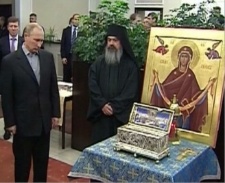
”Belt of the Virgin” syftar på en av den ortodoxa kyrkans främsta reliker, ”Marias bälte” som var på ”turne´” i Ryssland hösten 2011. Kritiken går ut på att genom att låta folkets intresse fokusera på sådant, så tar man bort uppmärksamheten från de brännande inrikespolitiska frågorna.

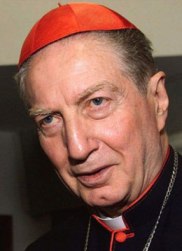
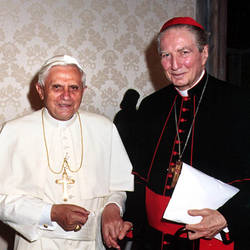
 Jag ser verkligen fram mot att träffa Kardinal Ravasi, chef för Vatikanens kulturråd som kommer till Sverige torsdag och fredag. Det är en session av projektet ”Hedningarnas förgård” som initierats av påve Benedikt XVI som nu hålls i Stockholm. Tanken är att troende och icke troende skall diskutera sådant som är centralt i människors liv som smärta, det onda, rättvisa, liv och död.
 Idag finns i DN kultur en helsidesintervju med Kardinal Ravasi som är mycket intressant. Några citat:
 Det borde vara okontroversiellt att vi alla ställer upp på att fördöma våld motiverat av religiös fundamentalism. Desto märkligare då den doktrin som skapats av vissa vänsterintellektuella att kritik av islam per definition är främlingsfientlighet. Mattias Gardell tycks driva den linjen, och vissa kristna driver också den linjen, som nu Steiner et al som idag har en andra artikel i ämnet på Dagens debattsida, där man enligt mig helt utan grund anklagar SEA för rasism för att man inte vill ta bort vissa artiklar av Mats Tunehag från sin hemsida som tar upp vissa problematiska sidor av islam.



 Som kristna behöver vi alla sätta tron hoppet och kärleken i första rummet och i öppenhet och respekt för medmänniskan söka det som är sant och gott. Sätter vi en politisk agenda i första rummet, så hamnar fokus någon annanstans och vi frestas bli manipulativa för att förverkliga vår agenda istället för att lyssna och samtala och förtrösta på att Herren leder oss rätt. som Joseph Ratzinger (nu påve Benedikt XVI)
  Bengts Blogg